Jellyfish stings are the most common marine-life injury on China's beaches. In surveys of China's coastal regions, jellyfish stings account for more than 60% of all marine-life injuries.
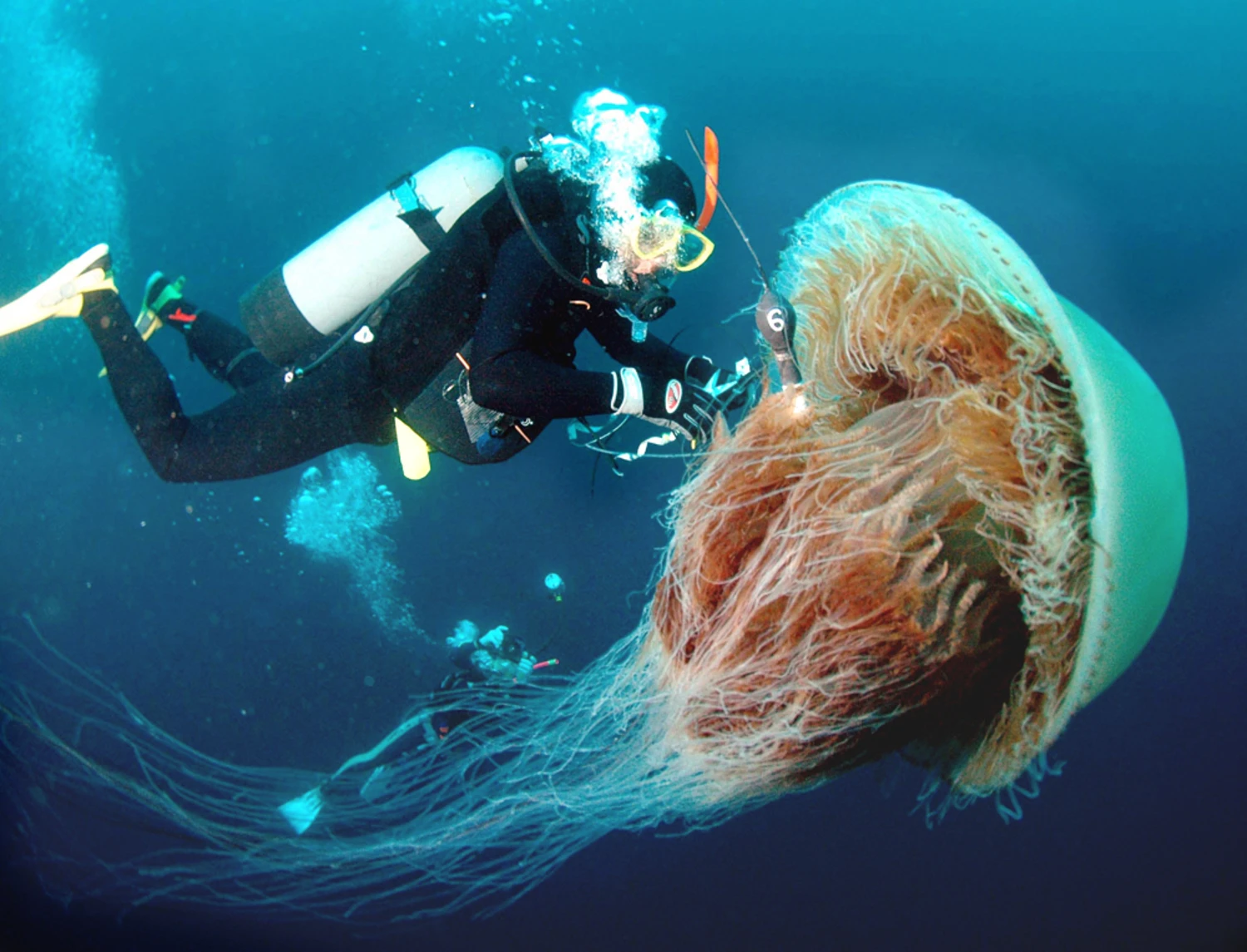
Image: NBC News, Nomura's jellyfish (Nemopilema nomurai)
Common symptoms of a jellyfish sting
- Redness, swelling, pain, and itching of the skin
- Blisters and rash
- In severe cases, difficulty breathing, irregular heartbeat, and allergic reactions
How to treat a jellyfish sting
- Leave the water immediately and avoid further contact with the jellyfish. If you experience difficulty breathing, confusion, chest tightness or palpitations, or a large-area sting, seek medical help right away
- Rinse the wound with seawater; never use fresh water or rub the wound
- Use tweezers or a credit card to scrape off remaining tentacles; never grab them with bare hands or wipe back and forth with a towel
- Soak the affected area in hot water at 40°C–45°C (or the hottest temperature you can tolerate) for 20 to 30 minutes
- Note: first-aid methods vary by species; follow the actual situation and a doctor's advice
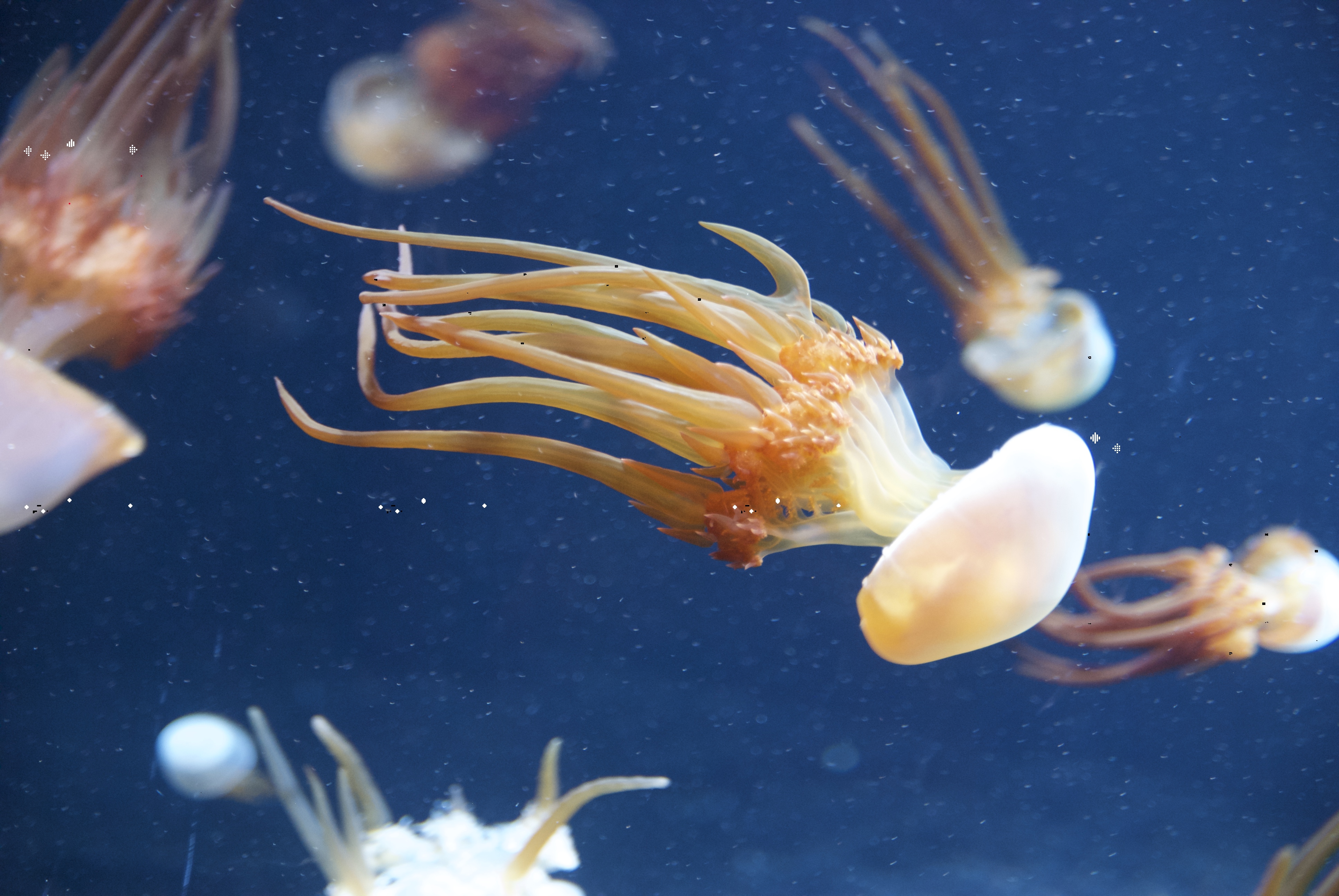
Image: Wikipedia, Cyanea nozakii
Species to watch out for
- Nomura's jellyfish (Nemopilema nomurai) — enormous and highly venomous
- Cyanea nozakii — increasing in number in China's coastal waters
- Portuguese man o' war — rare in China, but extremely venomous and potentially deadly
The severity of a jellyfish sting depends on the species, the contact time, and the individual's sensitivity. Although most stings cause only local symptoms, some species (such as the Portuguese man o' war) can trigger serious systemic reactions and even be life-threatening.
Where jellyfish are commonly found
Jellyfish stings are fairly common along China's coast. Some high-incidence areas include:
- The coast of the Shandong Peninsula, where Nomura's jellyfish is most common
- The coasts of Zhejiang and Jiangsu, where Nomura's jellyfish and Cyanea nozakii are common
- The coast of Fujian, where the Portuguese man o' war and Cyanea nozakii are common
- The coasts of Hainan and Guangdong, where the Portuguese man o' war is common
Image: NOAA, a jellyfish bloom
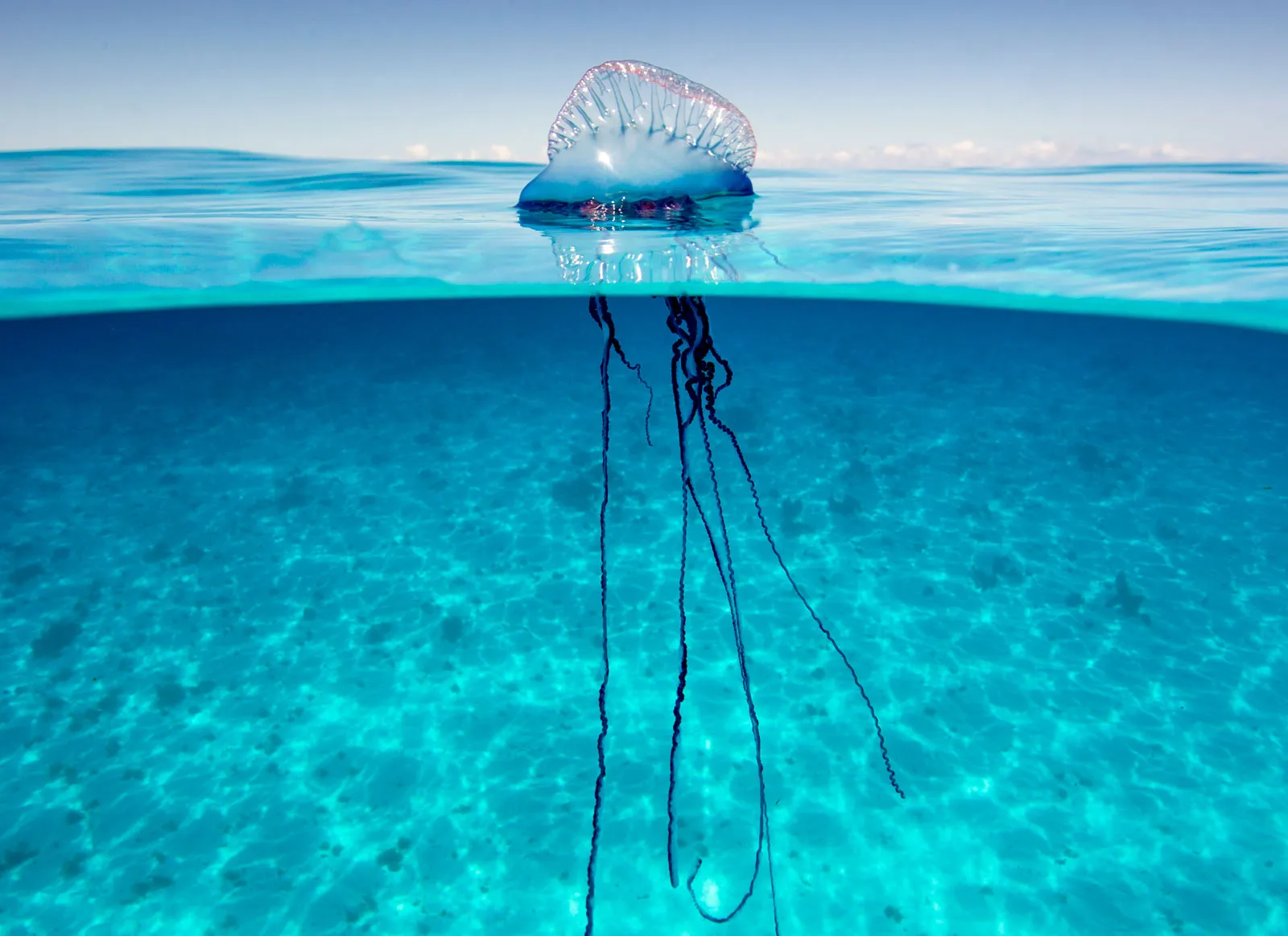
Image: Britannica, Portuguese man o' war
How to prevent jellyfish stings
- Watch for warning signs on the beach and avoid swimming during a jellyfish bloom
- Wear protective clothing (such as a wetsuit) to reduce exposed skin
- Avoid touching jellyfish floating in the water or washed up on the beach, even if they appear dead
- Learn which species are common locally and when they are active, so you can better avoid them
Why it's more dangerous in recent years
Along China's coast, the rate of jellyfish stings is rising, especially in summer and autumn. In recent years, jellyfish blooms have become more frequent, likely linked to rising ocean temperatures, overfishing, and marine pollution.
A bloom brings large numbers of jellyfish near the beach, increasing swimmers' risk of being stung. Stings can be especially dangerous for children and older adults, whose weaker immune systems make severe reactions more likely.
So when visiting the beach in summer and autumn, pay close attention to jellyfish-bloom warnings and take proper precautions to protect yourself from stings.
← Home